
Melasma Treatment, Guided by a Board-Certified Dermatologist
Melasma is one of the most frustrating pigment conditions to treat, and one of the most commonly mistreated. At Grace Dermatology, Dr. Lina Kennedy builds a melasma plan around how your skin actually behaves, not a single product or a single laser.
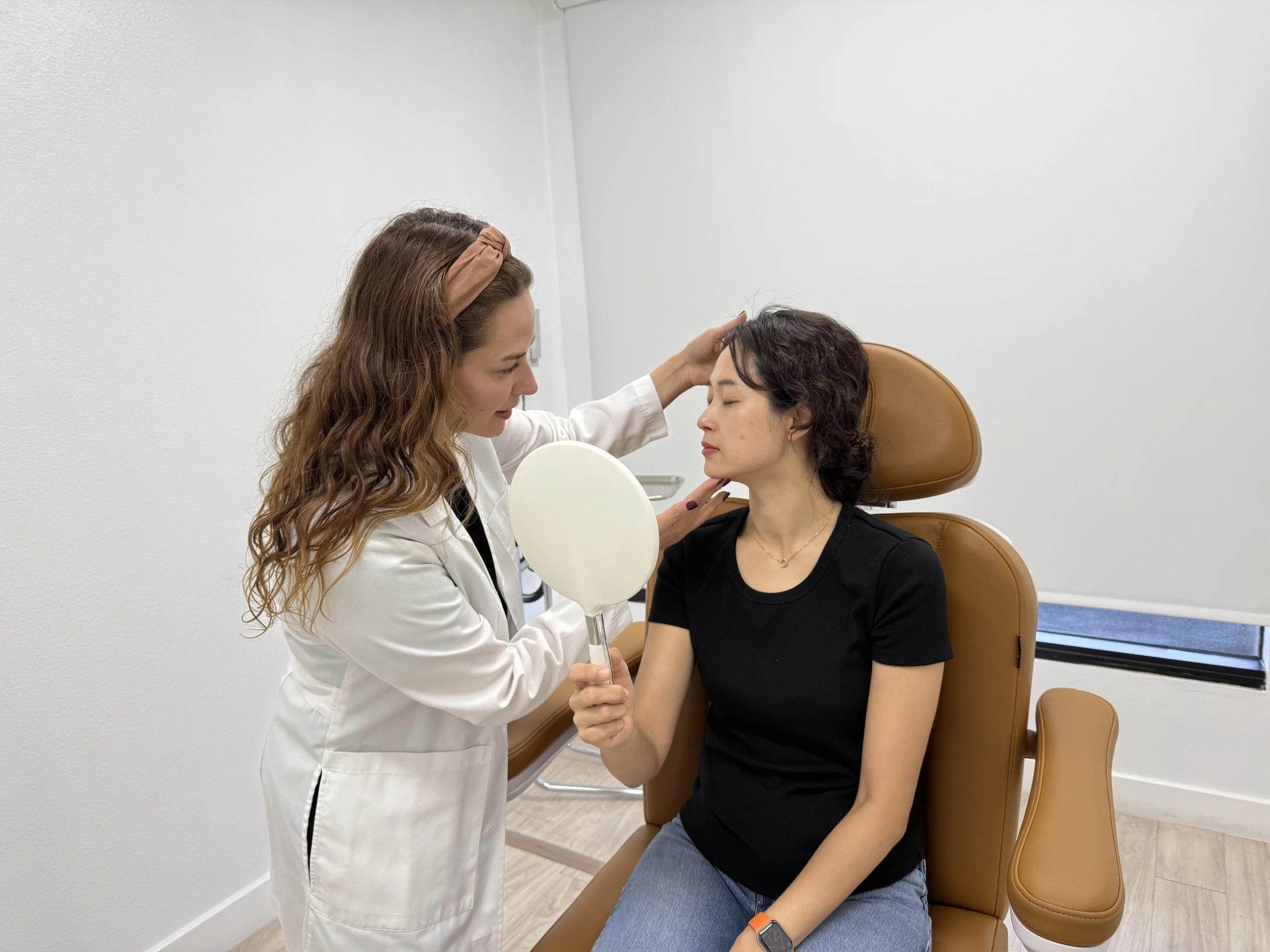
Why See a Dermatologist for Melasma
Melasma is frequently mistaken for ordinary sun spots and treated the same way, which is why so many patients arrive having already spent money without much to show for it. It sits deeper, it's driven partly by hormones, and it responds to heat and visible light as well as UV.
It's also one of the conditions where the wrong treatment makes things worse. Aggressive laser resurfacing can trigger more pigment rather than less, and in deeper skin tones the risk of post-inflammatory hyperpigmentation is real. Dr. Kennedy treats melasma across all skin types, and her approach is deliberately conservative on the laser side and thorough on everything else.
Brown or grey-brown patches, usually across the cheeks, forehead, or upper lip
Symmetrical rather than scattered
Darkens with sun exposure and heat
Often first appears during pregnancy or after starting hormonal birth control
Returns or worsens each summer
Doesn't respond much to over-the-counter brightening products
How Melasma Shows Up
Your Experience at Grace Dermatology
Consultation
Dr. Kennedy examines your skin, identifies your triggers, and reviews what you've already tried. She'll be direct about what's realistic. Melasma is managed rather than cured, and a plan built on that premise works better than one built on a promise.
Treatment
Melasma usually needs several things working together: prescription topicals like hydroquinone and tranexamic acid, daily sun and light protection, and Clear + Brilliant where a laser is appropriate.
Dr. Kennedy builds the combination around your skin and adjusts it as your melasma responds.
Results
Most patients see meaningful fading over two to three months with consistent treatment. Maintenance matters, melasma tends to return without ongoing sun protection and periodic topical treatment, and the patients who do best are the ones who plan for that from the start.
Frequently Asked Questions
-
Not permanently, and any provider who tells you otherwise isn't describing melasma accurately. What can be done is significant: patches can be faded substantially, and many patients keep them faint for years. The tendency remains, so treatment is ongoing rather than one-and-done, but "managed well" looks a lot better than most people expect when they first come in.
-
Melasma sits deeper than ordinary sun spots and is driven partly by hormones, so the brightening products that fade a few dark spots usually don't touch it. This is one of the most common reasons patients arrive frustrated, having already spent money without much to show for it. It isn't a failure on your part, it's the wrong tool for this particular problem.
-
The dose used for melasma is very low, far lower than the doses tranexamic acid was originally developed for. The main consideration is clotting risk, which is why Dr. Kennedy reviews your medical history, including any personal or family history of clots, before recommending it. For context, many commonly prescribed medications carry some clotting risk. It isn't the right choice for every patient, and that's a conversation you'll have together rather than a decision made in advance.
-
On its own, no — and the wrong laser can make it worse. Melasma responds to heat as well as light, so aggressive resurfacing can trigger more pigment rather than less, particularly in deeper skin tones. When Dr. Kennedy uses a laser for melasma it's Clear + Brilliant, a gentler option, and always alongside a topical regimen rather than in place of one.
-
Often, yes. Melasma is a medical diagnosis, so your visit can typically be billed to insurance, and standard prescription medications are generally covered depending on your plan. Some patients benefit from compounded topical formulas, which are prepared by a specialty pharmacy and aren't covered by insurance. Clear + Brilliant laser treatments are also considered cosmetic and are paid out of pocket. Dr. Kennedy will go over your options and expected costs at your consultation.
-
Grace Dermatology offers flexible payment and financing options, including CareCredit, so a treatment plan can fit your budget without compromising on who's providing your care. Pricing is discussed and customized during your consultation.
Ready to Treat Your Melasma?
Melasma responds to the right plan, applied consistently. Schedule your consultation with Dr. Kennedy to find out what yours should look like.